DfD ecosystem project final seminar: experimenting with intact deconstruction is important
The significance of DfD design (Designed for Disassembly) in future construction should be further emphasized. The DfD concept is based on designing concrete elements to be reusable. DfD promotes both low carbon construction and resource efficiency — and requires a significant shift in mindset within the construction industry. This article has been translated by using AI.
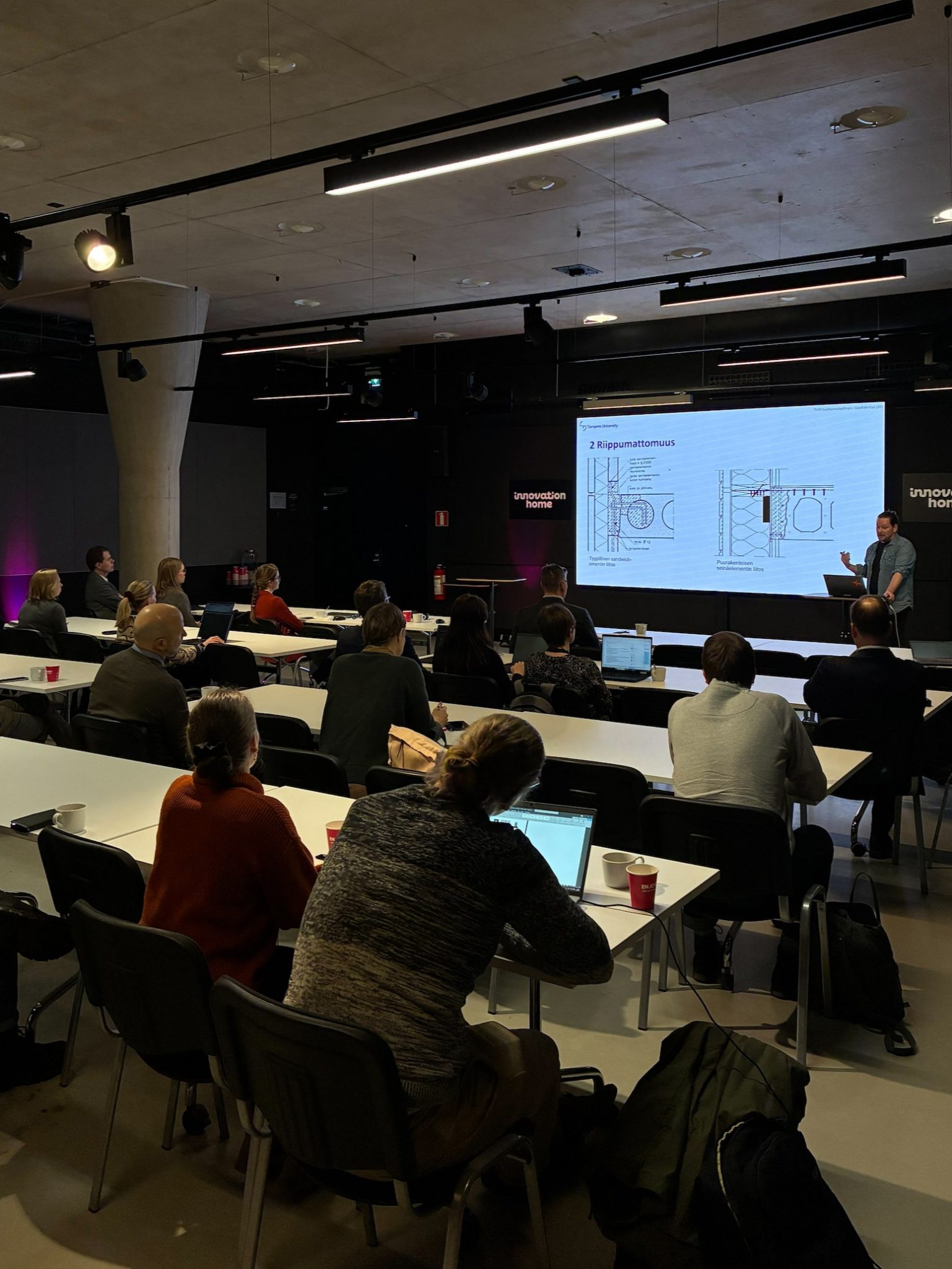
On Monday, 23 February 2026, the final seminar of the DfD ecosystem project was held at Business Helsinki’s office. The seminar was opened by Lari Sirén from the City of Helsinki’s Circular Economy Cluster. The project was presented by Arto Saari, Tuomo Joensuu, and Ulrika Uotila from Tampere University. Commentary speeches were delivered by Topi Paananen from Peikko Group and Harri Hakaste from the Ministry of the Environment.
The DfD project examined how value is created in building components designed for disassembly, and what kinds of business models support both this value creation and the reuse system itself. The aim is to move from the linear “build–use–demolish” model toward one where the value of building components is preserved and they can be reused. The research focused in particular on the internal concrete frame of buildings — hollow-core slabs. The project studied different types of connecting components that facilitate reuse, as well as ideas for what kinds of connecting components should be developed in the industry to advance reuse.
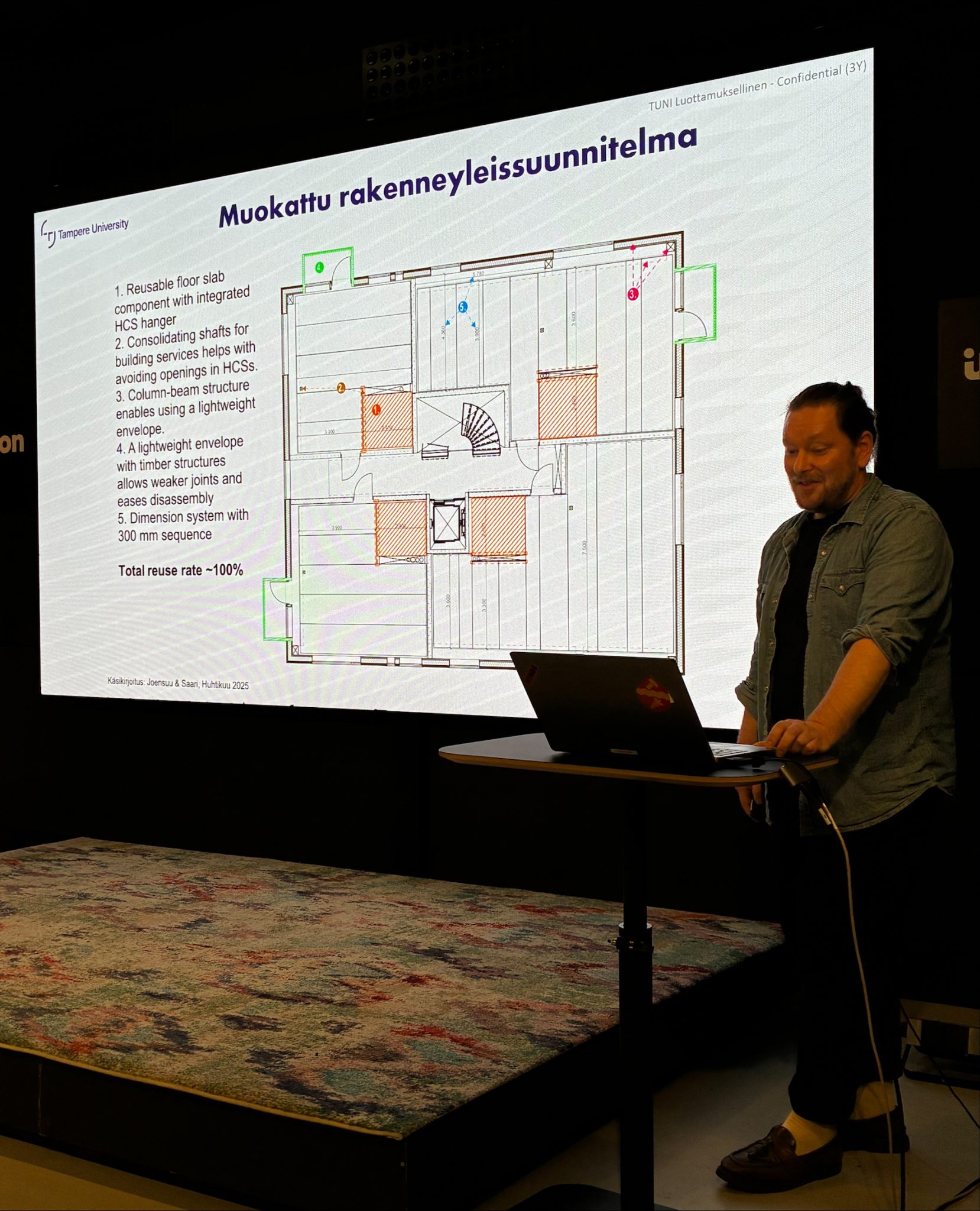
According to the researchers, the amount of previous DfD literature is very limited, even though DfD has gained global attention in recent years. For this reason, the project results do not offer ready-made products, but rather highlight problems in current structures that deserve attention.
Finland already has actors capable of DfD construction. Now the industry needs pressure to further develop DfD standards.
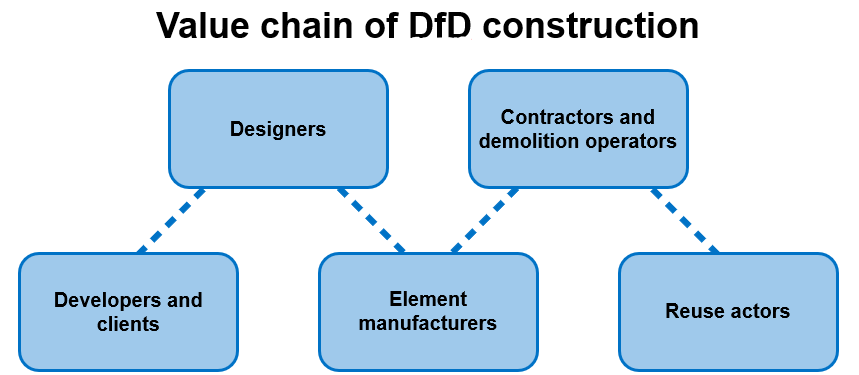
The value chain of DfD construction consists of multiple interconnected parties whose roles differ from traditional construction, particularly at the end of a building’s life cycle. Developers and clients play a key role in enabling DfD solutions, as DfD requires decisions already in the early stages of a project. Disassemblability, standardized dimensions, and connection techniques affect both costs and future reuse potential. Designers are responsible for translating DfD principles into technical solutions. Design choices determine how easily components can be dismantled intact and reused in the future.
Manufacturing DfD elements often requires more precise documentation and standardization compared to traditional elements, making the role of element manufacturers central to the process. At the end of a building’s life cycle, as demolition work is replaced by controlled dismantling, the importance of contractors and demolition operators increases. Reuse actors, such as material banks and digital marketplaces, ultimately connect dismantled components from deconstructed buildings to new construction projects. In DfD construction, the roles of value chain actors differ not only in content but also in their relationships compared to traditional construction.
DfD construction requires more information about components than traditional construction. In addition to standard data on physical properties, location, and materials, information is needed on connection methods, safe dismantling procedures, and testing required after removal. One of DfD’s challenges is therefore the preservation and flow of information: particularly long time spans and updating data pose difficulties. To ensure that information is easily available during the reuse phase, a centralized repository is needed. For example, a digital platform or material bank collecting data packages or material passports for individual components could serve as a solution. The material bank should be managed by a single entity to ensure clear responsibility and role distribution. Information should also be freely searchable and publicly shareable.
Authorities also play an important role in DfD construction, for example in developing regulation, incentives, and sanctions. Legislation — such as the circular economy act being planned by the Ministry of the Environment — could influence planning for intact deconstruction already at the design stage.
Solutions for DfD construction from companies: Peikko Group produces delta beams designed for intact dismantling and reuse
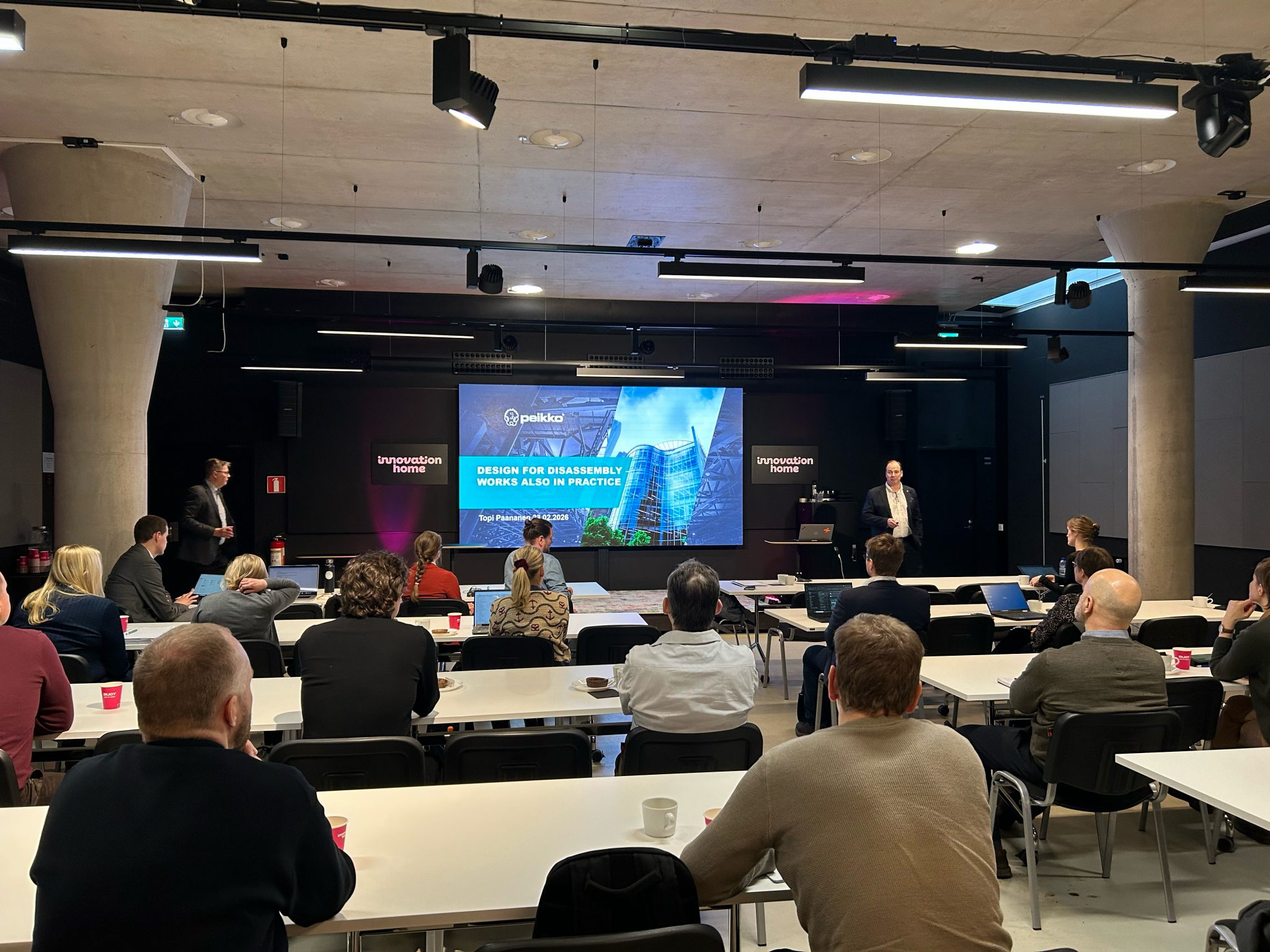
Topi Paananen emphasized the need to move from theory to practical implementation: modern solutions from companies could play a key role in this transition. As an example, Paananen highlighted Peikko Group’s delta beams made from low-carbon steel. These delta beams include built-in features that make them suitable for intact dismantling and reuse. This provides customers with a ready-made package compatible with DfD construction.
Currently, one of the biggest challenges in the circular economy is information sharing, which is crucial when seeking common sustainable solutions. A shift in mindset is needed in construction: instead of focusing on individual buildings, a circular economy–based way of thinking about buildings and building designs that can be replicated should be adopted.
DfD construction does not necessarily save more money than traditional construction, although it reduces carbon emissions and saves building components. However, according to Paananen, international comparisons show that buildings constructed in a circular economy–friendly way are perceived as more marketable. Peikko Group’s low-carbon delta beams — a simple way for clients to ensure circular construction — offer a glimpse into the future of construction.
Tampere University’s research group will publish a report on the DfD ecosystem project in the spring.
The Circular Economy Cluster has been one of the funders of the DfD ecosystem project.