Hemp, Straw and Clay Open New Pathways in the Circular Economy of Construction
On 25 March 2026, the Helsinki Circular Economy Cluster, in cooperation with the Regional Council of Uusimaa, hosted a morning coffee event on the use of bio-based materials in construction. The event featured inspiring presentations and concrete examples of how bio-based materials are being applied in practice.
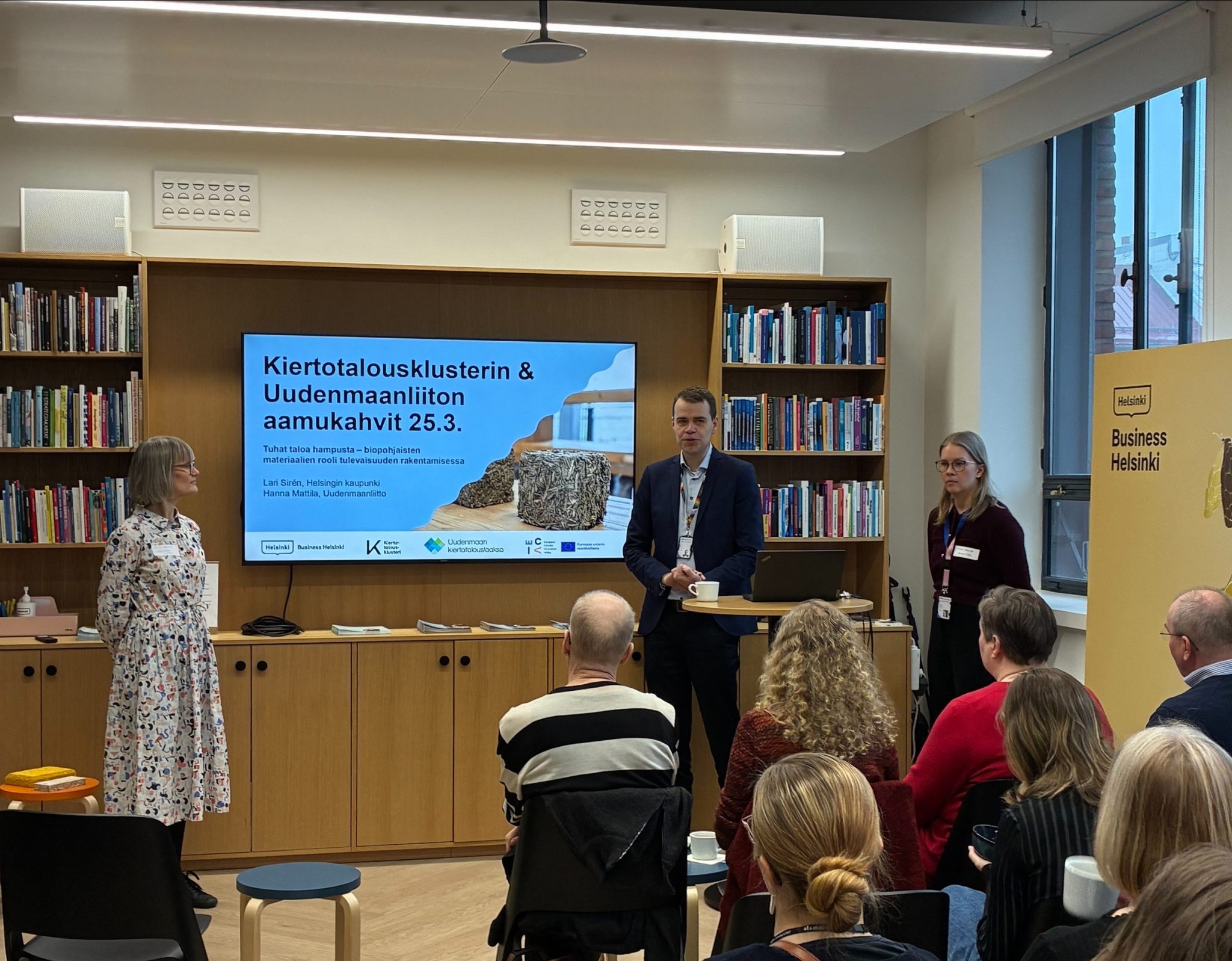
Demand-driven circular economy
Bio-based construction materials are moving from experimental pilots toward broader adoption. In the circular economy of construction, solutions are being sought that combine carbon sequestration, renewable natural resources, and circular economy principles. Hemp fibers, straw-based structures, and clay-based solutions were at the center of the expert presentations, which examined how bio-based construction can be integrated into everyday building practices in Finland and across Europe.
Nick Boersma (Circulair Friesland) highlighted the long-term work of the Friesland region in the Netherlands as a forerunner in the circular economy. The region aims to become a European leader in circular economy solutions, and construction has been identified as a critical sector due to its extensive use of natural resources. According to Boersma, the circular economy cannot be based solely on recycling materials if solutions do not simultaneously reduce environmental impacts and carbon footprints.
In Friesland, the transition has been built on demand-driven principles. Public actors and social housing providers have acted as pioneers by creating markets for circular solutions. This approach has positioned the circular economy as a regional development issue rather than a series of isolated projects or pilot experiments.
Boersma also introduced the hemp fiber deal launched in 2024, which serves as a concrete example of building a bio-based value chain. Construction companies were interested in using hemp-based materials, but sufficient supply was lacking. The solution was a multi-year contract model in which farmers receive additional compensation for growing hemp, while construction sector actors commit to using the material.
As a result of the deal, social housing providers created demand for hemp-based insulation materials, and construction companies were offered training in their use. In the first phase, approximately one thousand housing units will be insulated with hemp-based products. According to Boersma, an independent coordinator has played a crucial role by ensuring that quality control, certifications, training, and communications are implemented in parallel.
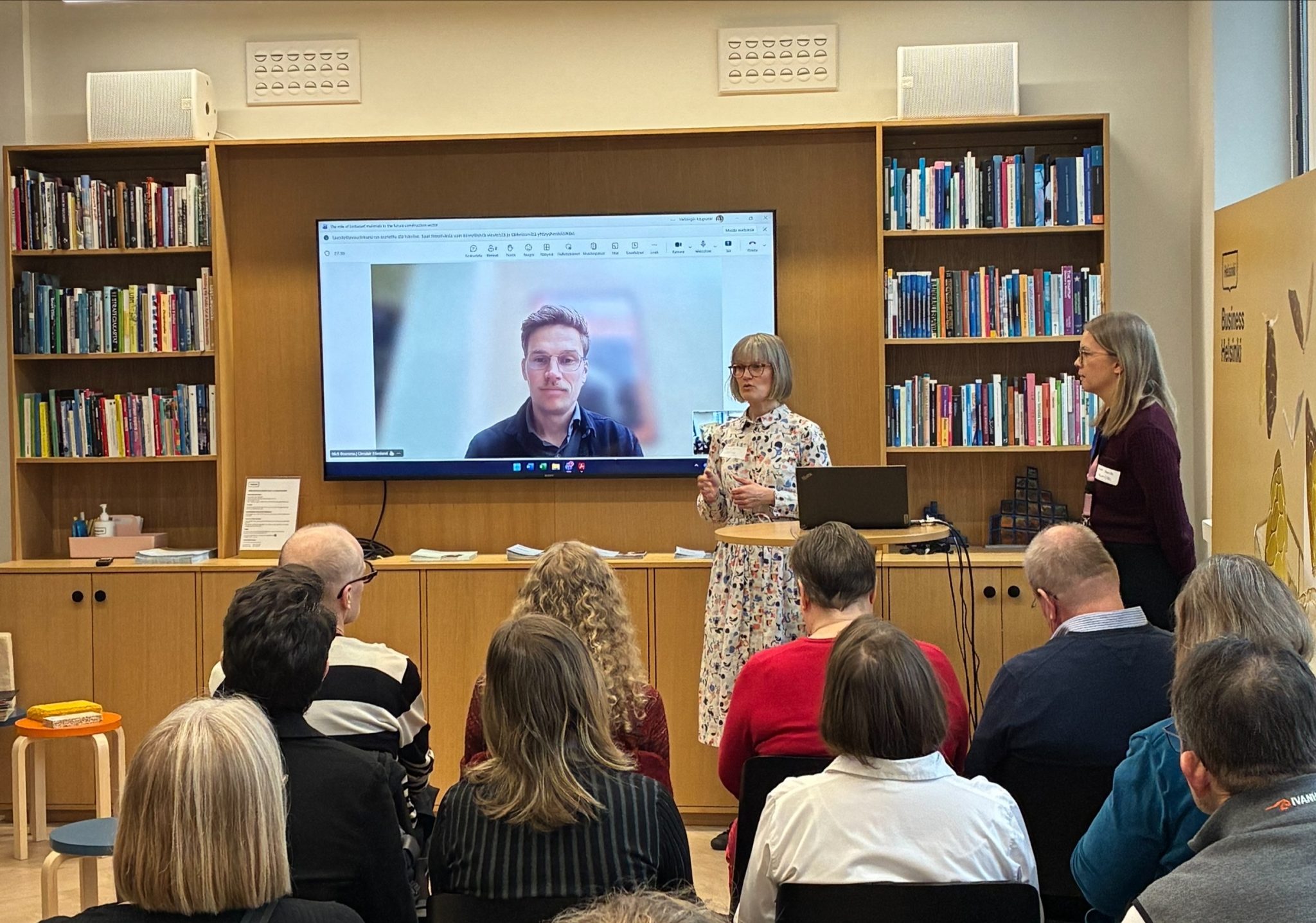
Nick Boersma presented the Netherlands’ hemp deal.
Opportunities for hemp construction in Finland
Noora Norokytö (Turku University of Applied Sciences) examined hemp from a Finnish perspective and presented domestic development projects and pilot initiatives. Hemp has been used, for example, in insulation, compressed panels, and hemp-lime and hemp-clay solutions. The material’s strengths include its suitability for Finland’s growing conditions, efficient carbon sequestration, and high biomass yield compared to forests.
The arguments for utilizing hemp are strong. Humanity benefits from this.
Norokytö also emphasized hemp’s agricultural benefits. Hemp improves soil quality, requires no pesticides or additional irrigation, and integrates well into crop rotation systems. However, challenges include the lack of domestic processing capacity and certified products, as well as the need to develop the entire value chain from field to construction site.
Anna Hjelt and Paul Lynch (EcoCocon) presented EcoCocon’s residential project in Hyllie, Malmö, which is a 12-story straw-based building. The project used industrially prefabricated wall elements, enabling fast construction, low emissions, and future disassembly of structures.
The project focused on housing quality, energy efficiency, and community rather than emphasizing straw in marketing communications. Experience has shown that bio-based solutions do not reduce the attractiveness of housing projects but can be part of high-quality and sustainable construction.
Ilkka Törmä (Tommila Architects) presented the concept design for the Puhdistamo project, in which an old wastewater treatment plant is repurposed for new use. The project combines the reuse of existing structures with the use of biomaterials, enabling significant reductions in carbon emissions compared to new construction.
Törmä emphasized that regenerative construction is always site-specific and based on collaboration among local actors. A building is not merely a technical solution but part of a broader value network in which material choices support identity, adaptability, and longevity.
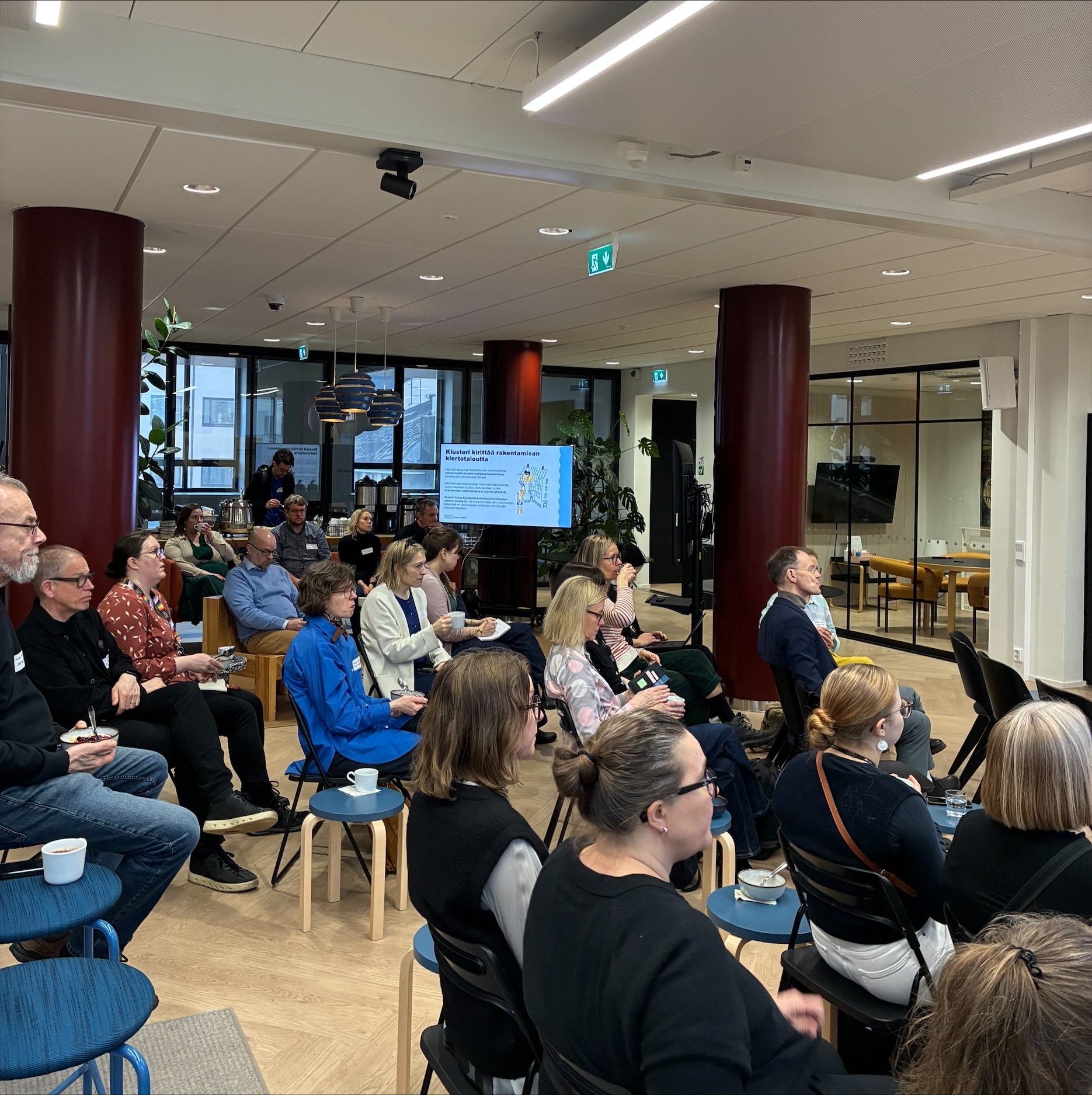
Cities as accelerators of bio-based construction
A shared theme across the presentations was the central role of cities and public actors as enablers of change. Scaling up bio-based construction and the circular economy requires clients who dare to test new materials in complete building projects and monitor their performance in real-world use.
Hemp, straw, and clay are no longer marginal experiments but credible alternatives that can simultaneously reduce construction emissions, strengthen local value chains, and promote more sustainable urban development.
Explore the event presentation materials on the event website under the “Ohjelma” section, accessible through each presentation title.