The activities of the Helsinki Circular Economy Cluster are seen as valuable – next steps toward more lasting change
A written survey on the activities of the Helsinki Circular Economy Cluster was conducted at the turn of 2025–2026. The results showed that the cluster is regarded as an important pioneer and support network in the circular economy. In the future, its activities are expected to become even more permanent and impactful. This article was translated by using AI.
The evaluation of the cluster’s activities was carried out through a written member survey and interviews with member organizations. A total of 42 responses were received. Respondents broadly represented the entire construction value chain, from design and building to consulting and public authority roles.
– The member survey shows that the Cluster has done impactful work that has brought genuine added value to its members. Based on the results, the core actors in construction circular economy hope for more support in business growth and scaling innovations in the future. This is where we intend to focus even more going forward. At the same time, new experiments and joint learning will remain our focus, says Lari Sirén from the City of Helsinki’s Circular Economy Cluster.
What kinds of activities have been perceived as successful, and in what direction is the circular economy cluster expected to develop? This article examines the findings.
A positive overall message about the impacts of the Cluster’s diverse activities
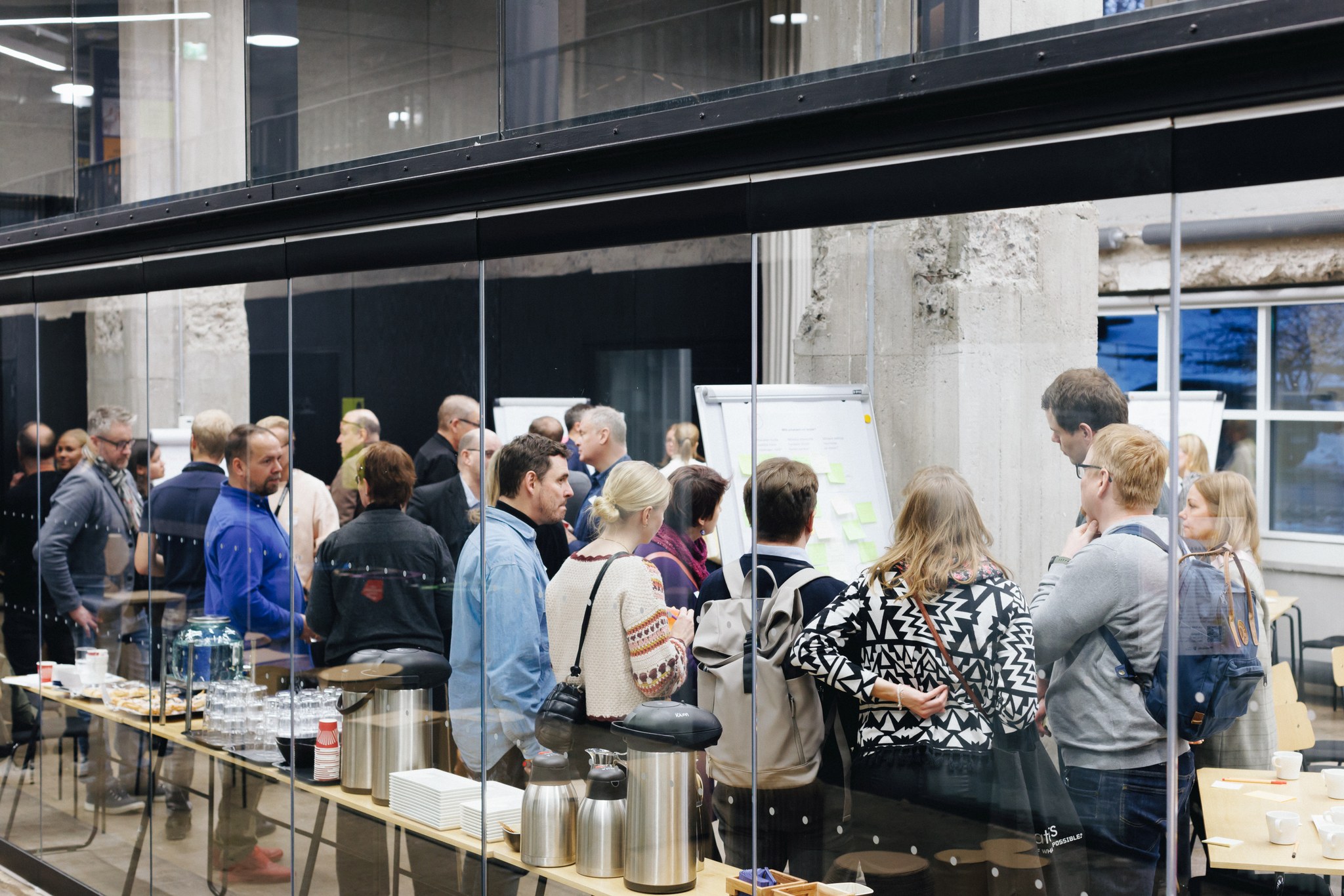
Circular economy has become one of the priorities in the City of Helsinki’s 2025–2029 city strategy. This is also reflected in the scope of the Cluster’s activities. The work of the Circular Economy Cluster is seen as valuable not only for its members, but for the entire construction circular economy sector. In particular, thematic morning coffee sessions, demo Thursdays, and low-threshold networking events have been popular. Respondents reported participating widely in the events organized by the cluster, and the network is seen as a safe space where competitive settings give way to sharing knowledge, lessons learned, and successes. The events are characterized by a unique and confidential atmosphere that encourages bonding and generating new ideas. The Cluster has succeeded in creating genuine experiments whose lessons continue to live on even after the experiments have ended.
The time spent on members is time very well spent.
Members see the Cluster’s role both as an internal enabler within the city and as a national—and partly international—pioneer. The Cluster acts as an important point of contact and information intermediary between actors at different levels, streamlining operations in the field of circular construction. Industry trends are reflected in its activities, as seen in the topicality and diversity of the themes addressed. The Cluster’s activities and services are considered useful and necessary, and no activities were identified in the material as having become unnecessary.
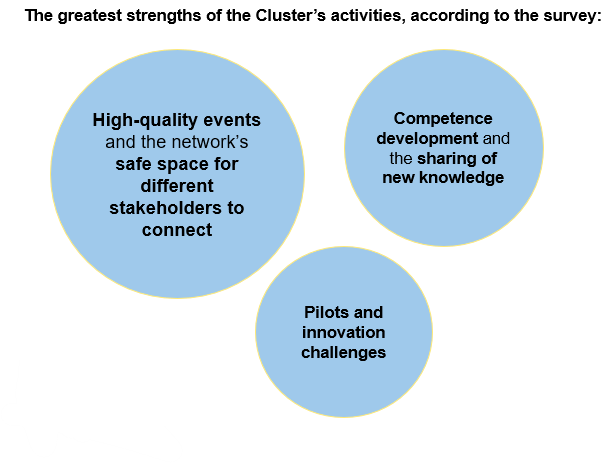
Members of the Cluster’s network feel their needs are being met either fully (26 responses) or partially (16 responses). At the same time, there is a desire to broaden perspectives beyond the existing “bubble.” For example, reaching students or smaller actors could expand activities and bring new perspectives to circular construction. Many still see circular construction as unfamiliar, perhaps because they are not exposed to it. Thus, the Cluster’s role as a bridge-builder is becoming even more emphasized.
Next: expanding the circular economy “bubble” and embedding lessons into everyday practice
Overall, members are very satisfied with the Cluster’s activities and hope they will continue largely in the same way. The most important themes for the next term were considered to be:
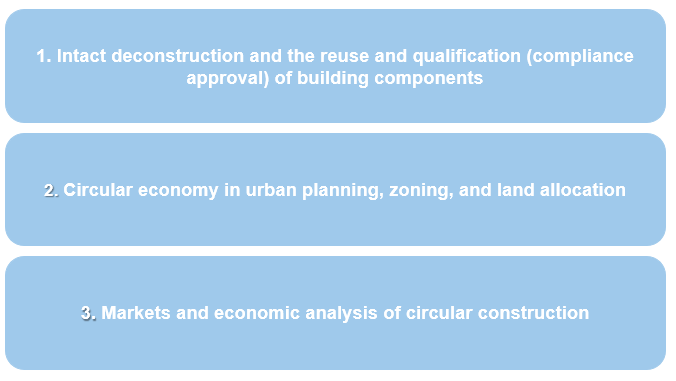
For the new term, members also hoped that, in addition to current topics, greater attention would be given to land-use planning, zoning, and structural design alongside ongoing work. Broader project development was also requested to ensure that change in the sector becomes more systematic and permanent. Lessons learned through experiments and pilots are hoped to become part of everyday practice for actors. Members also hoped the cluster would take initiatives on how experiments could be scaled and administrative barriers dismantled so that trials and knowledge-sharing would not remain one-off events.
In the future, activities are expected to generate more lasting development that embeds lessons permanently into construction industry practices. From a circular economy perspective, this has already become a core issue in the construction sector, pursued increasingly over time. Therefore, the next step could be to establish and expand operating models, potentially across Finland.
The economic dimension of circular construction also emerged in the material. What kind of financial impacts do circular solutions and experiments have? How can successes and failures be used as learning opportunities to ensure that circular construction is economically viable regardless of scale? The cluster’s activities are hoped to include more economic perspectives and business models going forward—improving business profitability would also increase investment in circular economy solutions.
Members also hoped for support in scaling activities into more permanent projects, even though pilots and experiments have been seen as useful. In addition, members wished for support in embedding best practices at both national and international levels. They are interested in learning, for example, from peer countries such as Sweden or the Netherlands in the field of circular construction. Beyond knowledge exchange, support for expanding activities into international markets could also be considered. However, the primary focus of activities was still hoped to remain in Finland.
The Circular Economy Cluster will continue to play a key role in circular construction
The work of previous terms provides a strong foundation for the Cluster’s continued activities. The cluster’s network has developed into a community that not only shares knowledge, but jointly transforms the entire sector. Enabling innovation and dialogue across organizational boundaries further strengthens the pursuit of shared goals, even in the face of more complex challenges in the future.
Would you like to participate in the activities? Membership is free of charge and does not commit you to anything.
Remember to subscribe to the Cluster’s newsletter to receive information about upcoming events and other current topics in circular construction.
The survey and interviews were conducted in cooperation with Sweco.