Seasonal cooling and technology innovations bring smart solutions to buildings
Buildings of the future need to consume less energy, function more intelligently and respond to increasingly diverse needs. Testbed Helsinki seeks solutions to these challenges by testing and co-developing new technologies together with companies, universities and other partners.
Did you know that buildings and the built environment account for around 40 per cent of all energy consumed? Improving energy efficiency can reduce both the operating costs and emissions of buildings.
– Reducing energy consumption is an important goal, but at the same time, buildings must remain functional and comfortable for their users in different weather conditions. When testing new solutions, it is important to assess both energy savings and feedback from building users, says Mikko Martikka, Senior Specialist for built environment testbed activities at Business Helsinki.
New solutions are needed for areas such as building cooling, optimisation of energy consumption, property maintenance and building services. But which solutions work in real operating environments, and how can they improve the energy efficiency and performance of buildings? New approaches have recently been explored in Helsinki through a seasonal cooling pilot, energy efficiency experiments in the ERKKI project, and building technology innovation projects carried out by students at Metropolia University of Applied Sciences.
Smart seasonal cooling brought relief during summer heat at a health station
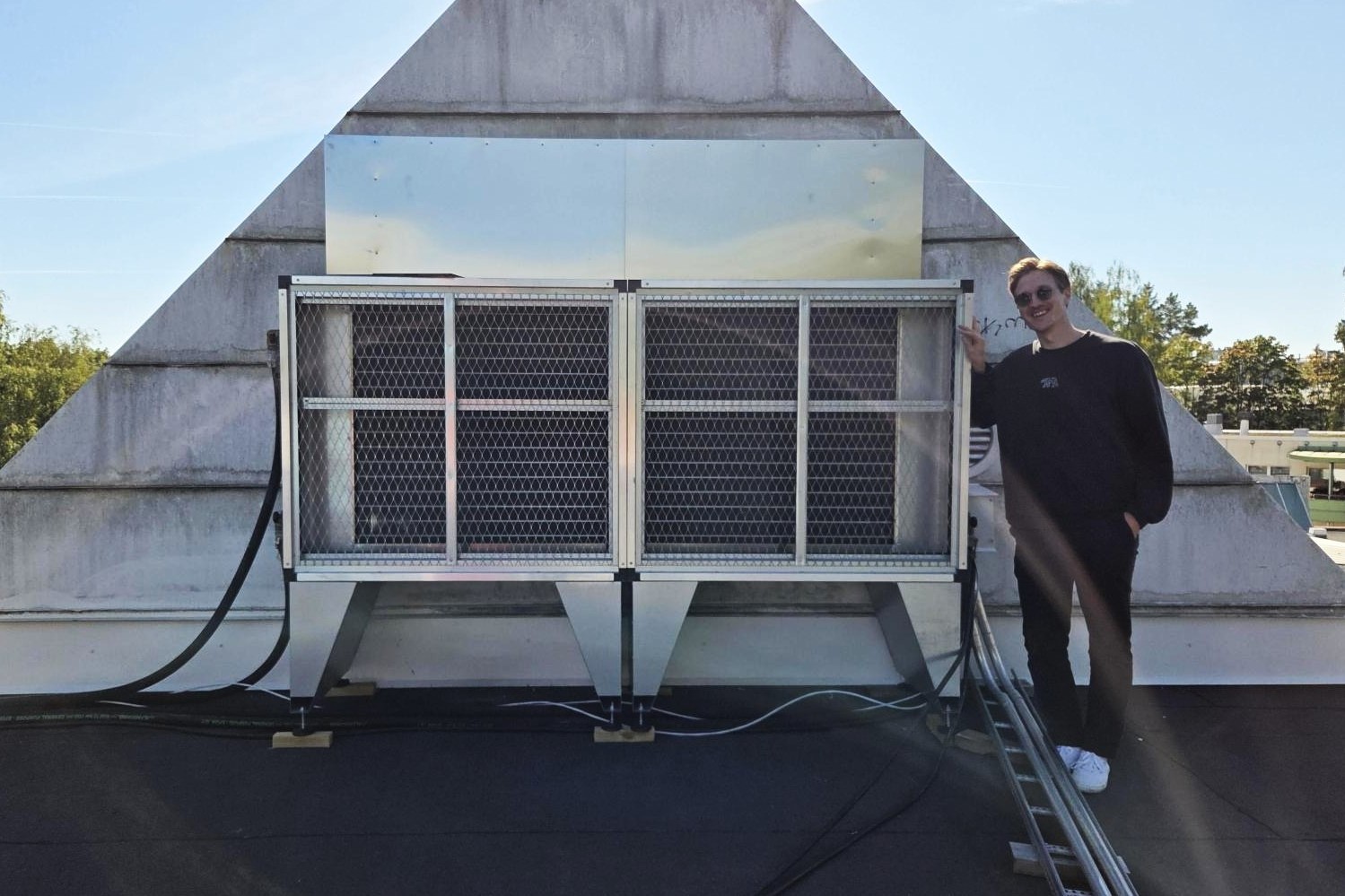
Seasonal cooling solutions for buildings are attracting growing interest in Finland’s highly variable seasonal conditions. Solution by Arctic Warm combines an air-to-water heat pump with smart analytics to provide a systematic approach to producing and managing energy according to seasonal needs. The innovation was tested for seasonal cooling from July to September 2026 at Munkkiniemi Health Station, where maintaining a suitable indoor temperature is important for both comfort and patient safety, particularly during hot summer days.
What were the benefits of seasonal cooling?
Sensors were used to measure temperature, relative humidity and CO₂ levels. In the rooms where the solution was piloted, temperatures remained between 19 and 24°C throughout the measurement period. Measurements elsewhere in the building were consistently around one degree higher on average, ranging from 21 to 25°C. The system also effectively removed moisture from the supply air, making indoor conditions feel more comfortable.
A survey of staff across the property found that during the pilot, 78% of respondents considered the premises either suitably cool or even slightly too cool. Before the pilot, only 26% of staff considered the indoor temperature suitable.
– The next development step is to integrate the cooling equipment with the ventilation automation system. This will allow us to optimise cooling capacity and operating times according to actual demand, improving energy efficiency while ensuring the best possible indoor conditions, says Eemil Hirviniemi from Arctic Warm.
– Our solution can be scaled to almost any existing property, enabling cooling without the need to invest in permanent systems. At the same time, Aurora Block units strengthen security of supply, as they can be flexibly moved to locations where additional heating or cooling capacity is needed.
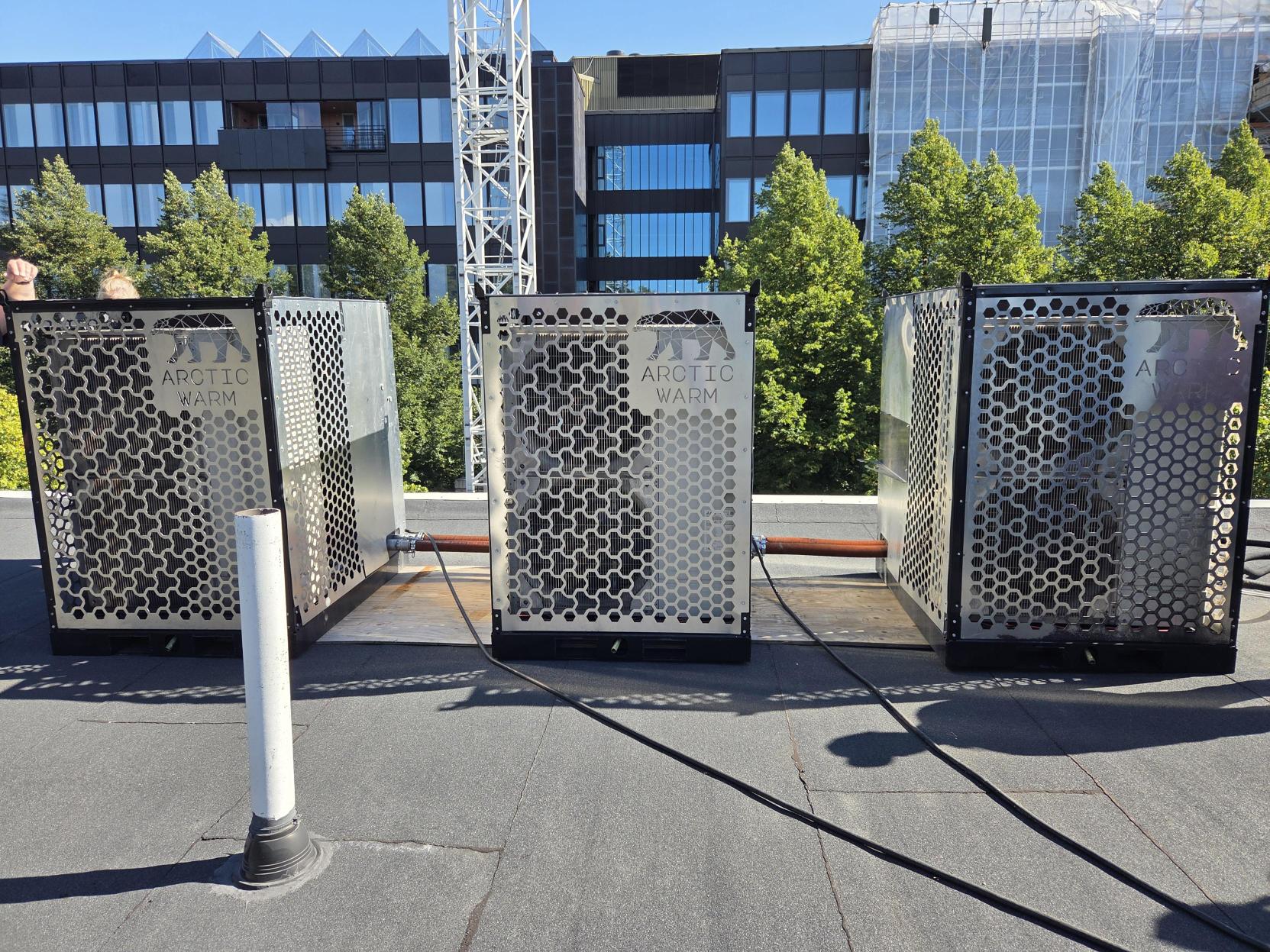
– Seasonal cooling as a service can be a very viable solution for managing indoor temperatures during the summer, particularly when a major investment in a permanent cooling system is not justified, for example due to an upcoming major renovation, says Veera Sevander, Chief Energy Expert at the City of Helsinki.
AI and data help improve building energy efficiency
The City of Helsinki has also supported the development of energy-saving solutions by funding the ERKKI project, jointly implemented by Forum Virium Helsinki and Green Net Finland. The project enabled companies to test their solutions in real operating environments. The goal was to find new ways to improve the energy efficiency of properties that are particularly energy-intensive or challenging to maintain.
Experiments in the ERKKI project
- Wapicetested an AI-based solution for controlling football pitch lighting.
- Granlund developed analytics to better target energy-efficiency measures.
- Energy Plus Engineering (EplusE) explored how the energy consumption of properties could be reduced through operational improvements and by developing staff expertise.
The experiments provided practical information on how energy consumption can be optimised and savings achieved without major investments. They also helped identify development needs in buildings and supported maintenance planning. Companies gained valuable experience and references for the further development of their solutions, while the ERKKI project also strengthened collaboration between different City Divisions.
From megatrends to practical solutions: Metropolia students envision the future of building technology
What will building technology look like in the Helsinki of the future? How can buildings be better prepared for crises? And what kinds of solutions could the next generation of professionals develop for companies to use? These questions have been explored through collaboration between the City of Helsinki’s Facilities Services and Metropolia University of Applied Sciences as part of a multidisciplinary innovation project course. Students work in teams to develop new approaches for the property and construction sectors.
The innovation projects have already been implemented twice, and a third round is currently underway. The aim is to provide the City with fresh perspectives and concrete development ideas for different stages of building services and property life cycles. During the previous round, project topics were selected based on Sitra’s 2025 megatrends and applied to Helsinki’s built environment. This year’s new topics include building services control in civil defence shelters, utilisation of waste heat and energy storage.
The search for energy-saving solutions continues
The City of Helsinki’s experiments and collaboration with companies and educational institutions help identify solutions that respond to the changing needs of buildings and provide new ways to improve existing properties.
– Not all properties can be renovated at once, and not every challenge requires a major refurbishment. New technical solutions, smarter controls and improved operating practices can also deliver significant improvements in existing buildings. The key is to identify where these solutions can provide the greatest benefit, says Mira Jarkko, Chief Expert leading Green Transition and New Technologies team at Business Helsinki.
